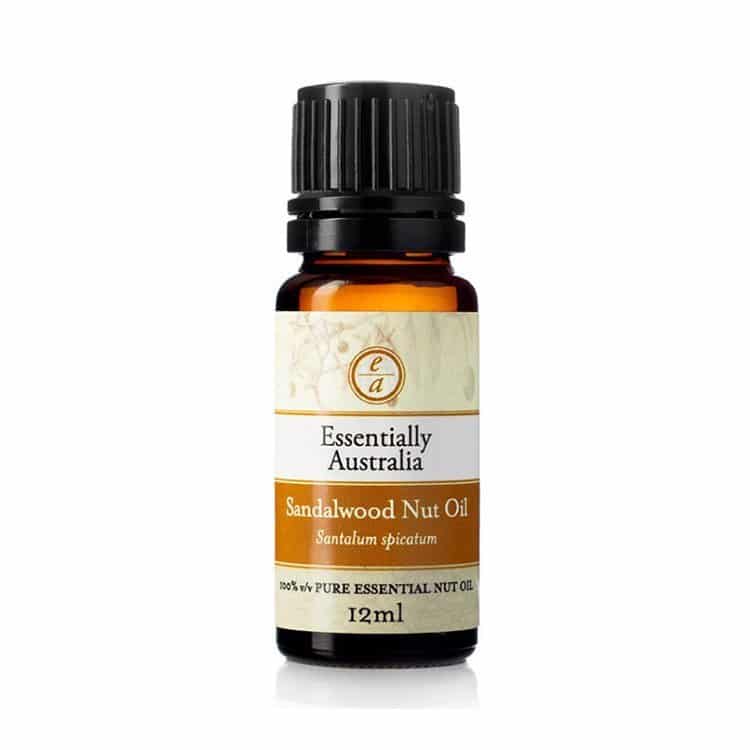
Australian Sandalwood Nut Carrier Oil
Australian Sandalwood nut carrier oil is unique and exceptional, it is a supreme skin moisturiser. Its also great for softening the scalp and hair, it makes hair softer and smoother, great for fizzy hair. It is an excellent massage or carrier oil. It is ideal in skin cream formulations.
Botanical name: Santalum spicatum
Ingredients: 100% v/v pure Australian Sandalwood nut oil of the Sandalwood (kernel), extracted by CO2 distillation.
Aroma
Australian Sandalwood nut oil has a mild woody, green odour the oil is a pale green to clearishamber colour.
Benefits
Australian Sandalwood nut oil has excellent emollient qualities, is non sticky and very smooth. The oil is extremely moisturising to the skin, scalp and hair. it is excellent an anti aging product. Sandalwood nut oil readily accepts essential oils being mixed with it.
Uses
Use to moisturise and soften the skin, also soften and moisturise the hair, decrease hair frizziness. It is excellent for the scalp as a moisturiser and scalp softener. Use as a straight massage oil or blend into another massage oil.
Blend essential oils into it for massage, use as a moisturising ingredient/emollient in cosmetic formulations, apply direct to aged skin.
Modern Day Aromatherapy Uses
Carrier oil for massage, cosmetic formulations, soaps, body lotions, body butters, lip balm, it is an excellent emollient, it spreads smoothly and evenly.
Blends with
Blends into other massage or carrier oils. Also suitable blended with essential oils and used in massage or skin cream formulations.
Try blending with Essentially Australia Oils: Australian Rose Essential Oil, Australian Sandalwood Essential Oil, Lemon Myrtle Essential Oil, Fragonia Essential Oil, Kunzea Essential Oil
Massage
Use as is, straight from the bottle, pour into an open bowl or dispense from a pump bottle.
Food Flavouring
Do not use as a food flavouring, Sandalwood seeds were not a food of choice with Australian indigenous people.
Key Chemical Constituents
oleic acid, ximenyic acid, linoleic acid, palmitoleic acid, stearic and linoleic acid.
Other Common Names:
Western Australian Sandalwood Nut.
Indigenous Australian name in Pilbara region, Putatu.
Natural Occurrence in Australia
A very widespread tree, found in nearly all of Western Australia, except the Kimberlies. Also found in South Australia on Eyre Peninsula, Flinders Ranges, northern Mt Lofty Ranges and possibly into the Broken Hill region of New South Wales.
Characteristics
Thick, viscous consistency, similar to Almond oil.
Research
There has been consumer research into the skin benefits on a sample group of Australian people. The results found that participants reported their skin felt softer, their face felt more moist and supple, there were less wrinkles and flakiness. there were also good reports on the benefits to the skin on the hands, neck and around the eyes.
Extraction and Farming Method
Australian Sandalwood plantations now total over 14,000 hectares, primarily in the wheat belt of Western Australian. Nut production has begum in recent in years, it is anticipated trees will be ready for harvest for timber and essential oil production around 2018/19.
The trees are grown conventionally in plantations with a host tree (usually an Acacia called Raspberry Jam Acacia – Acacia acuminata, planted within a metre or so of an Australian Sandalwood tree. The Sandalwood trees finds moisture and nutrients from the Wattle/Acacia tree, without killing the Acacia/host tree.
Nuts are harvested, mechanically processed (nut cracking of the hard woody shell). The nut kernel is then placed into a machine where the oil is extracted via super critical CO2 distillation. This distialltion uses no heat and produces the best oil, with little to nothing lost in the processing of the nut.
History
Traditional Usage
The nuts were prised for moisturising the skin, hair and scalp by indigenous people for centuries around Western and South Australia. Today indigenous people still harvest Australian Sandalwood trees.
Early European Usage
The kernel was not used very much it seems by colonial Australians.
Present Day Usage
This is a very new and exciting carrier oil to the cosmetic and aromatic industries. A lot of research has been done on this oil and it has been approved by government regulatory authorities for use on the skin and scalp.