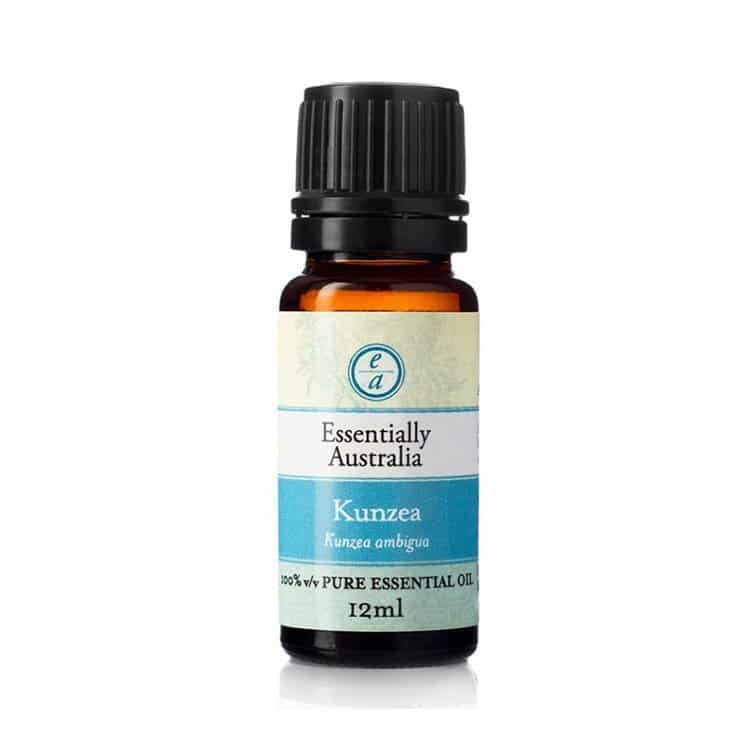
Kunzea Essential Oil
Kunzea essential oil is probably Australia's next essential oil wonder.
Kunzea essential oil has many remarkable properties.
Its properties have been highly mentioned and promoted by world renown aromatherapist Dr Daniel Peneol.
Kunzea essential oil is great for irritated red spots on the skin, it is a known antiseptic, it is fantastic for tired joints and muscles.
Unlike Tea Tree oil, its aroma is very pleasant, it is almost always compared as ‘a smell of the Australian bush'.
Botanical name Kunzea ambigua
Ingredients 100% v/v pure Kunzea ambigua essential oil.
Aroma
A pleasant, fresh, with some spicy undertones.
Benefits
Amazing for quick soothing relief from tired muscles and joints,
Its great for dry, flaking, itcy skin.
Relief from stress, anxiety, nervous tension and mental exhaustion.
Uses
A small drop or 2 can be added direct to the skin for tired muscles or joints.
For dry, flaky skin, add a drop or 2 near but not on dry, flaky skin.
Also use in an oil burner, vaporiser, bath, massage oil, spa, saunas, potpurri and room deodorisers.
Directions and More Uses
Kunzea essential oil has been listed with TGA for relief from, arthritis, rheumatism, muscular aches and pains, insect bites and insect bite inflammation, symptoms of influenza.
Kunzea essential oil is good for irritated skin, good for soft tissue issues.
Aromatherapy Oil
2 to 4 drops in an oil burner or vaporiser, 1-2 drops into a bath.
Blend with
Eucalyptus varieties, Fragonia, Lemon Myrtle, Rosalina and Tea Tree or Sandalwood.
Massage
10 to 25 drops per 100ml of carrier oil.
Main Actives
Kunzea essential oil has a unqiue combination of compounds, alpha-pinene, 1,8 cineole, globulol, viridifloral, bicyclogermacrene which can address infection and tired muscles and joints.
Precautions
Kunzea essential oil is non toxic, non irritating, sensitive skins should do a skin patch test.
Keep out of reach of children, store away from direct sunlight, store below 30 degrees.
Avoid during pregnancy.
Other Common Names
Tick Bush, Ducane Kunzea, White Cloud, White Kunzea.
Natural Occurrence in Australia
Kunzea essential oil naturally occurs in the woodland of eastern Tasmania, southern Victoria and south east New South Wales.
The kunzea ambigua plant grows to around 5 metres, they can grow in clusters and they actually benefit from regular pruning, if not they become quite gangly. A superior variety is farmed in north east Tasmania by wild harvesting an extensive population of plants.
Harvesting for Kunzea essential oil has been carried out for nearly 20 years.
Reasonable but not high and regular rainfall is preferred.
Characteristics
Clear to very pale yellow, watery, fresh, mild spicy undertone, not too intense.
Extraction and Farming Method
Kunzea essential oil is extracted via steam distillation of the leaves and green branchlets.
Kunzea is grows wildly and abundantly in the wild in north east Tasmania, it is also in eastern Victoria and south east New South Wales.
The Kunzea plants are sometimes ‘pruned' by grazing animals and there are no fertilisers required.
Kunzea is hand harvested and are then steam distilled immediately to maintain quality Kunzea essential oil.
History
Traditional
There are no stories of indigenous people use at present but it is almost certain the indigenous people would have used the plant.
Early European Usage
The early settlers noticed native animals always use to sleep under a Kunzea shrub.
It was later established that the native animals slept under the bush to rid themselves of ticks, as a result the bush was called ‘Tick Bush'.
Like many native Australian plants with an abundance of essential oils, the plant is not attacked by many insects, as the oil in the leaf is quite unpalatable to most insects and native animals.
Present Day Usage
Each harvest of Kunzea essential oil is tested for quality and stored in optimum, even temperature conditions.
It is used for treating anxiety, stress, aiding relaxation, insect stings and bites.
Typical Chemical Profile of Kunzea Essential Oil
| alpha-pinene | 30-48% |
| 1,8-cineole | 15% |
| globulol | 7-15% |
| viridiflorol | 6-12% |
| biocyclogermacene | 4-6% |
| alpha-terpineol | 1-4% |
Also contains small amounts of spathulenol, citronellol, ledol, limonene, calamenene.
Relative Density: 0.880-0.960 @ 20 C
Refractive Index 1.462-1.484 @ 20 C